

From the Beltway to Belonging: My Journey to Heart-Centered Work
The movement taught me how to run a room. I had to teach myself how to hold one.



I came up in rooms that rewarded speed.
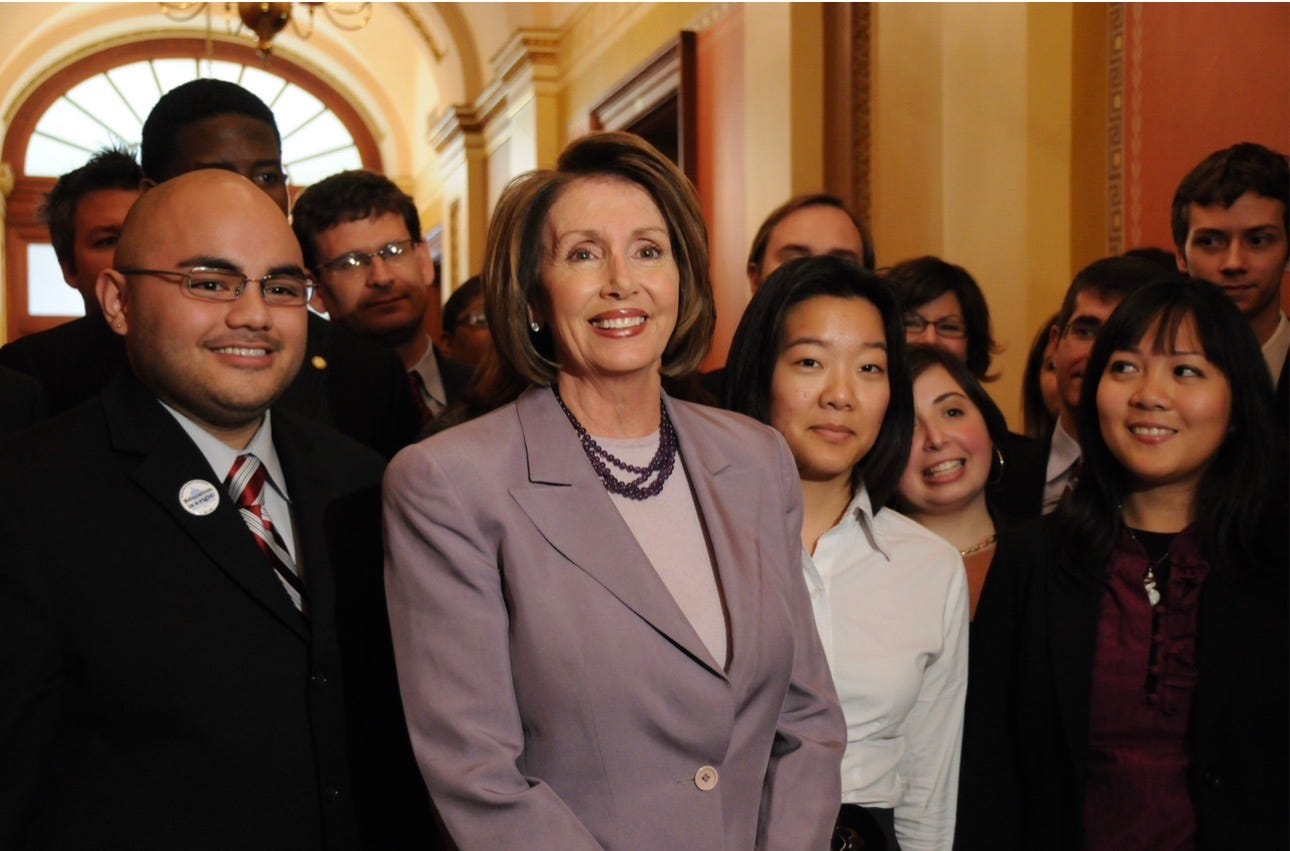
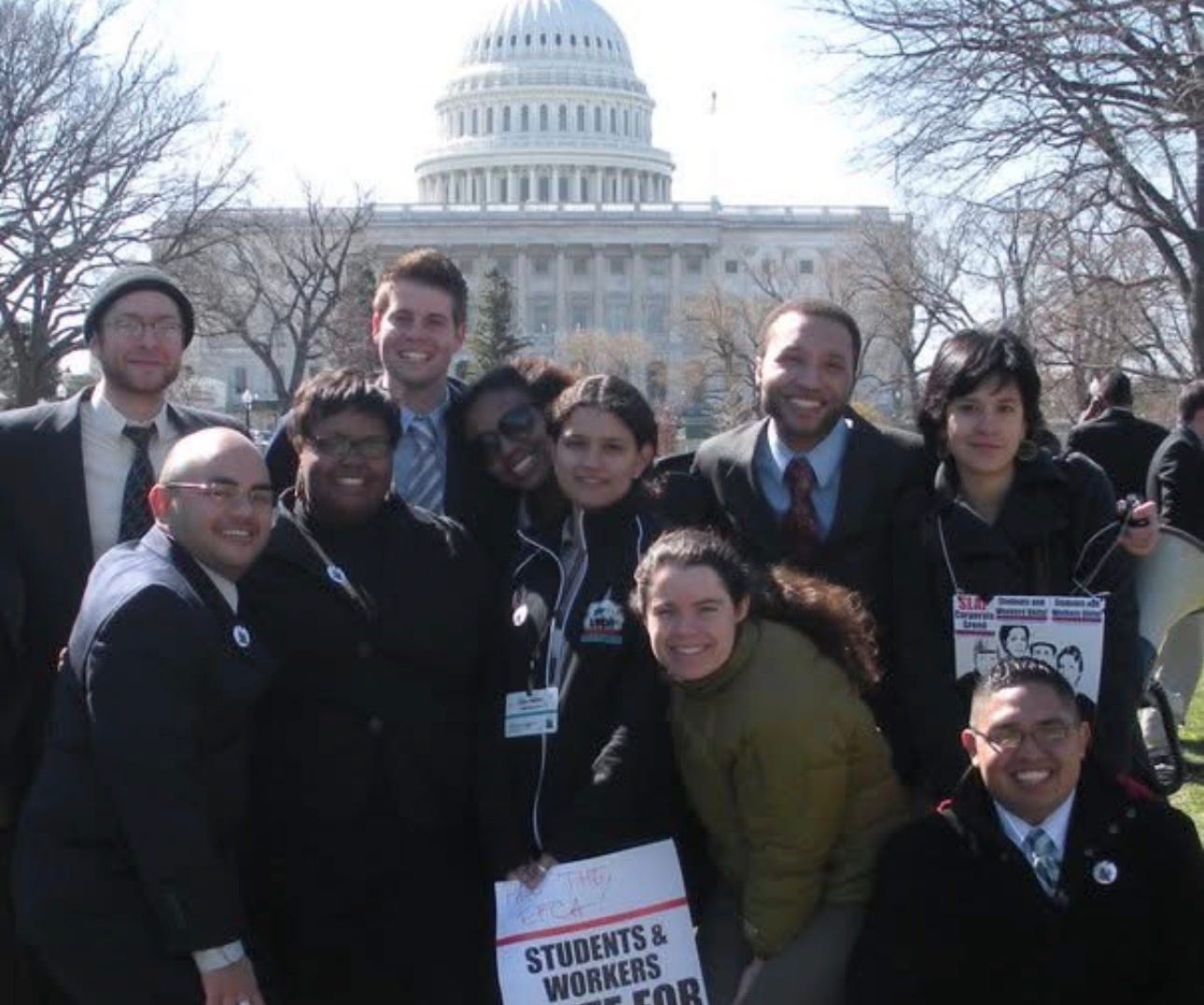
In my early twenties, I was deep in the student organizing and politics world, later serving as President of the United States Student Association in the Nation’s Capitol. Over the 16 years I lived in Washington, DC, I built alongside people who believed that if you moved fast enough and fought hard enough, the world would bend. The rooms I learned in were urgent. The agendas were packed. The stakes were real. And the measure of a good meeting was whether everyone left with a clear assignment and a deadline.
I was good at those rooms. I could facilitate a contentious plenary. I could hold a vote in Robert’s Rules of Order. I could keep a room of hundreds of people on a timeline. I was efficient. I was focused. I was useful.
I was also, if I am honest, performing.

What the Movement Gave Me
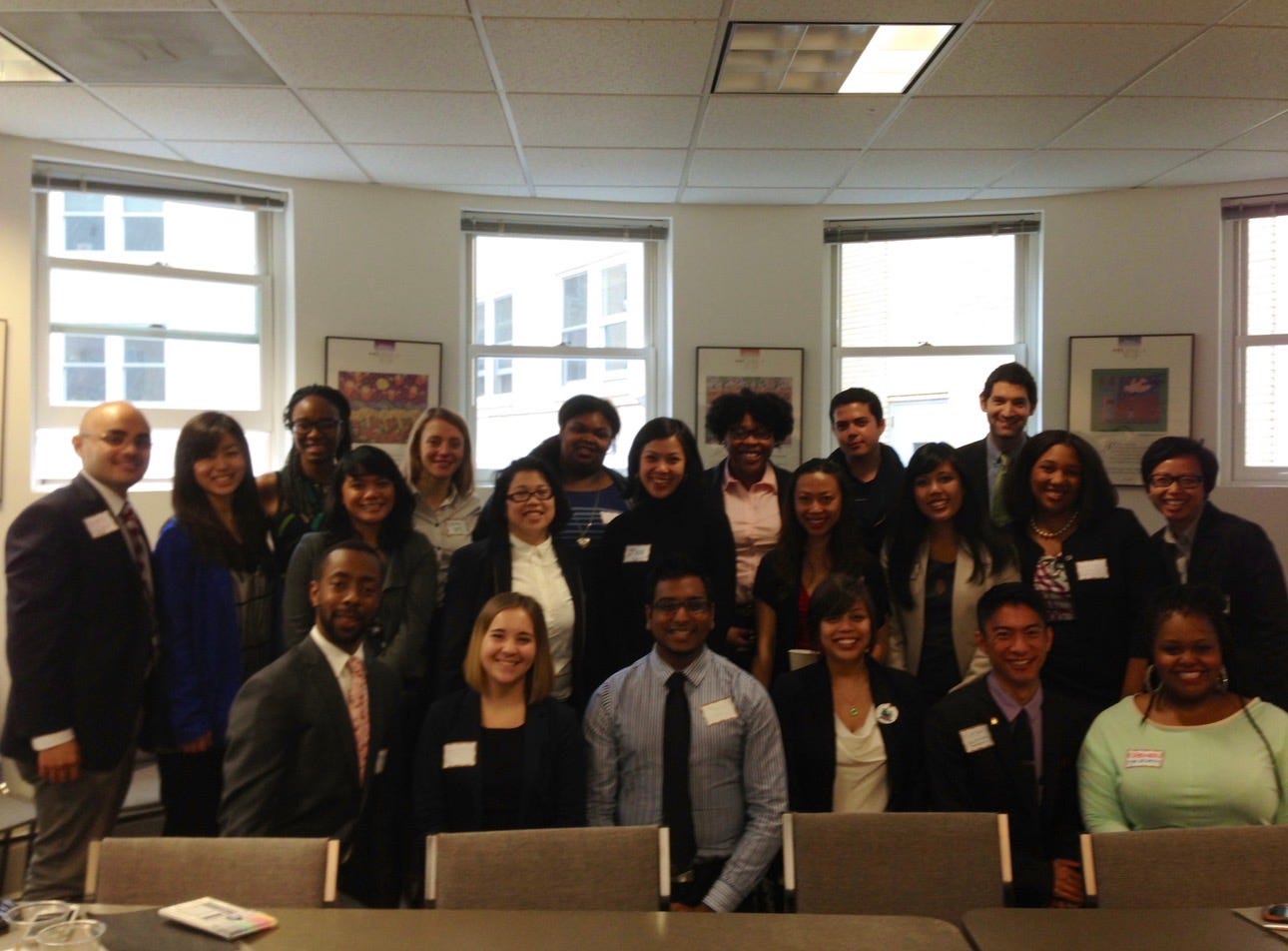
I owe the movement in ways I am still discovering. It gave me my political education, my understanding of power, my sense of purpose. It introduced me to people who changed my life, including Carmen, whom I met in those exact rooms and who is now my best friend, co-founder, co-creator, and one of the people I trust most in this work.
Carmen and I tell a story about the early days. We were at a meeting in DC, and I kept using the word “guys” to address the room. Someone slid me a note: “Check your privilege.” Three words on a piece of paper. It stopped me cold. Not because I was offended, but because I realized I had been in rooms my whole life where certain language was accepted without question, and no one had ever asked me to consider its impact.
That moment did not just change my vocabulary. It changed my orientation. It was the first time I understood that how I showed up in a room mattered as much as what I accomplished in it.
The movement gave me that. It gave me accountability. It gave me community. It gave me Carmen. And it gave me the raw materials I would eventually need to build something different.
But the movement also taught me some things I had to unlearn.
What I Had to Unlearn
I had to unlearn urgency as a default setting. In those spaces, everything is urgent. Every meeting is critical. Every timeline is compressed. And after enough years in that rhythm, your nervous system starts to believe that calm is the same thing as complacency. That slowing down means you do not care enough.
That is a lie. But it took me a long time to understand it.
I had to unlearn the idea that a well-run room is a tightly controlled room. I had been trained to manage energy, redirect tangents, and keep things “on track.” But whose track? Whose definition of productive? I started to notice that some of the most important things said in the rooms I facilitated were the things I had been trained to call “off-topic.”
I had to unlearn the performance of strength. As an openly gay Filipino man, I had learned early that certain rooms required a specific kind of presence. Confidence. Sharp. Unshakable. I could do that. But the cost was that I was performing a version of leadership that left no room for the rest of me. For the parts that were tender. For the parts that needed to sit with something before responding. For the parts that wanted to lead from stillness instead of volume.
I had to unlearn all of that. And in the space that opened up, something else became possible. What became possible was a different kind of leadership.
Calm as a Strategic Advantage
I did not arrive at this phrase overnight. It came from years of practice, of therapy, of paying attention to what happened in rooms when I changed my own energy before trying to change anyone else’s.
Here is what I noticed: when the facilitator is regulated, the room regulates. When the person holding the space is not performing urgency, the people in the room have permission to slow down. And when people slow down, they say what they actually mean. They listen differently. They make better decisions.
Calm is not passive. Calm is not disengaged. Calm is a decision. It is the decision to hold steady when the room gets hard, to breathe before you respond, to trust that the silence after a difficult question is not a failure but an opening. It is the decision to bring your regulated nervous system into the room as an offering, not because the room is not hard, but because it is.
This is what I mean when I say I want to help leaders move from reactivity to regulation and from pressure to purpose. It is not a slogan. It is a practice. It started with me. And will always start with me.
Filipino and Queer Joy. Full Presence.
There is something else the movement did not teach me, something I had to find on my own: the right to bring my full self into the room.
My personal brand, if you want to call it that, is grounded in Filipino and Queer joy. That is not a tagline. It is a commitment. A commitment to bringing fullness, authenticity, and embodied presence to every space I enter. Because for most of my career, those parts of me were the parts I was asked to leave at the door.
The organizing rooms I grew up in were brilliant at fighting for justice in the abstract and sometimes terrible at making space for all the identities of the people doing the fighting. I learned to lead with my strategy. I did not always feel safe leading with my culture, my queerness, my softness, my joy.
Heart-centered convening changed that for me. When I shifted from running rooms to holding them, I discovered that the parts of myself I had been hiding were actually the parts that made me a better convener. My ability to sit with emotion instead of managing it. My instinct to honor what is unspoken. My belief that a room should feel like it was made for the people in it, not in spite of them.
Those are not liabilities. Those are qualifications and, frankly, should be the baseline.
The Room I Am Trying to Build
Carmen wrote last week about the kitchen table, about the room that shaped her before she had any language for what convening was. I carry a version of that too. My kitchens looked different, sounded different, smelled different. But the lesson was the same: the best rooms are the ones where you can be whole.
That is the room I am trying to build now. Every time I facilitate. Every time I design a convening. Every time I sit with a leader who is trying to figure out how to bring people together in a way that does not break them or the people they serve.
I am not the facilitator I was in my twenties. I am slower. I am quieter. I listen longer. I hold more space and fill less of it. I let the room breathe.
And honestly, the rooms (and me) are better for it.
The Beltway taught me how to run a room. The journey since then taught me how to hold one. And the difference between those two things is, I think, the entire point of this work.
This conversation is better with more people in the room.
If this piece sparked something for you, forward it to a colleague, a fellow facilitator, or that friend who’s always the one holding the space. And if someone sent this to you, welcome. Subscribe so you don’t miss what’s next.
 | A guest post by
|