

The Kitchen Table Was My First Convening
Long before I knew the language of facilitation, I learned what it meant to gather in the kitchen.


Don’t have time to read? No problem, take a listen!
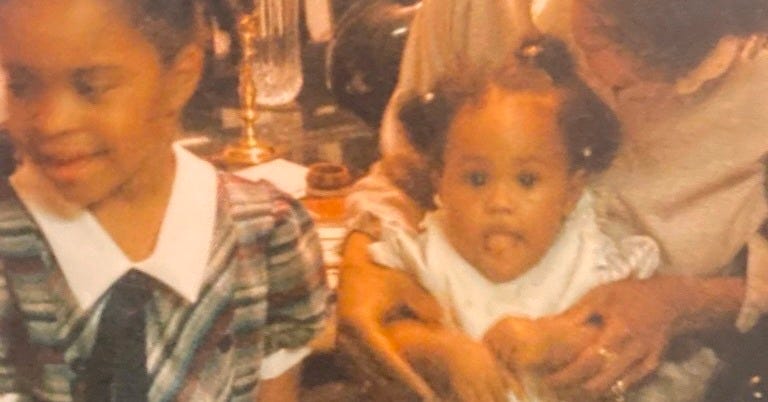
I grew up in the kitchen.
Not near it. Not passing through it. In it.
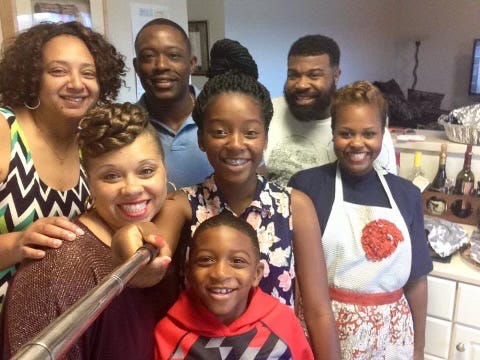
The kitchen at my grandmother’s house. The kitchen at my mother’s mother’s house. The kitchen at my father’s mother’s house. My mother’s kitchen. My father’s kitchen. And honestly, in just about every home I have ever loved, the kitchen was where the real life of the house lived.
Not the living room with the good furniture. Not the room that was supposed to stay clean. The kitchen.
I remember the smell of chicken frying in a cast-iron skillet, which is still one of the most reassuring smells I know. I remember learning how to make pancakes with my mother’s mother, Alma, and feeling like getting to help was the smallest promotion in the world. I remember my father’s mother, Joyce, teaching us how to bake bread, which felt less like cooking and more like participating in something old and sacred. I remember cleaning chitlins around the holidays with my mother, which may not sound magical to everybody, but to me, it is memory, labor, lineage, and family.
The kitchen held all of it.
Before I ever knew words like facilitation, belonging, or convening, I knew the kitchen. I knew that people came there for more than one reason. They came to cook, yes, but also to talk, think, watch, learn, confess, celebrate, cool off, and be near somebody. In my house, the kitchen was also where homework got done because it had the brightest light. It was where hair got pressed for special occasions, with a straightening comb heating up on the stove and all the tenderness, care, and very specific kind of childhood discomfort that came with that ritual. It was where you got the news. It was where you got corrected. It was where you learned.
The kitchen was not just a room.
It was an ecosystem.
Share this post with a friend who’s always the one holding the space.
And it had rules. There was a way to move in the kitchen. A way to help. A way to stay out of the way. A way to know when somebody needed an extra hand and a way to know when they absolutely did not. There were tools that mattered, appliances that had stories, and dishes that meant something because they had belonged to somebody before they belonged to us. Even when it looked casual, it was not. It was curated. It was practiced. It was alive.
And maybe that is part of why I still think so much about the kitchen when I think about how people come together now.
Because the kitchen understood some things long before conference centers did.
The kitchen understood that preparation is a form of care. If you are making a big meal, you do not just wander into it with vibes and optimism and hope your way to a full table. You need ingredients, timing, tools, and a plan. You need to know what needs to start early, what can wait, and what cannot be left unattended for too long unless you want to ruin the whole thing. There is rhythm to it. There is sequence. There is intuition. There is a plan, even if nobody wrote it on a flip chart.
The kitchen also understood that a room can do more than one thing at once. It can be practical and sacred. It can be a workplace and a refuge. It can hold hard conversations and soft landings. It can feed people in more ways than one.
That is one of the reasons I get irritated when organizations start cutting the budget for snacks, drinks, or shared meals as if food is extra. As if nourishment is the decorative part of gathering. As if people have not always come together around food. As if a plate is not sometimes the first thing that tells your body you are safe here.
Food is not beside the point.
Food is part of the point.
Food is one of the oldest ways human beings say, I thought about you before you got here.
And maybe that is what the kitchen taught me most clearly. That gathering is not just about what gets said. It is about what gets felt. It is about whether the space has been prepared in a way that lets people arrive fully. It is about whether there is warmth in the room, whether literal or emotional. It is about whether people can come in carrying what they carry and still find a place to set something down.
I did not know then that I was learning how to convene.
I just knew the kitchen felt different from every other room in the house. It had purpose. It had movement. It had memory. It had a center of gravity. People were always coming toward it. Even when they had no reason to be in there, they ended up there anyway.
That feels important to me now.
Because I have spent so many years in professional spaces where people act like convening begins with an agenda, or a registration page, or a microphone, when some of our earliest lessons about bringing people together came long before any of that. They came from watching the people in our families make something out of what they had. They came from learning how to be in the room. They came from seeing that care and structure are not opposites. They belong together.
The kitchen table was my first convening.
It was my first lesson in preparation, rhythm, welcome, correction, care, and lineage. And honestly, when I think about the rooms we are trying to build now, I think a lot of them would be better if they remembered the kitchen.

This conversation is better with more people in the room.
If this piece sparked something for you, forward it to a colleague, a fellow facilitator, or that friend who’s always the one holding the space. And if someone sent this to you, welcome. Subscribe so you don’t miss what’s next.
 | A guest post by
|