


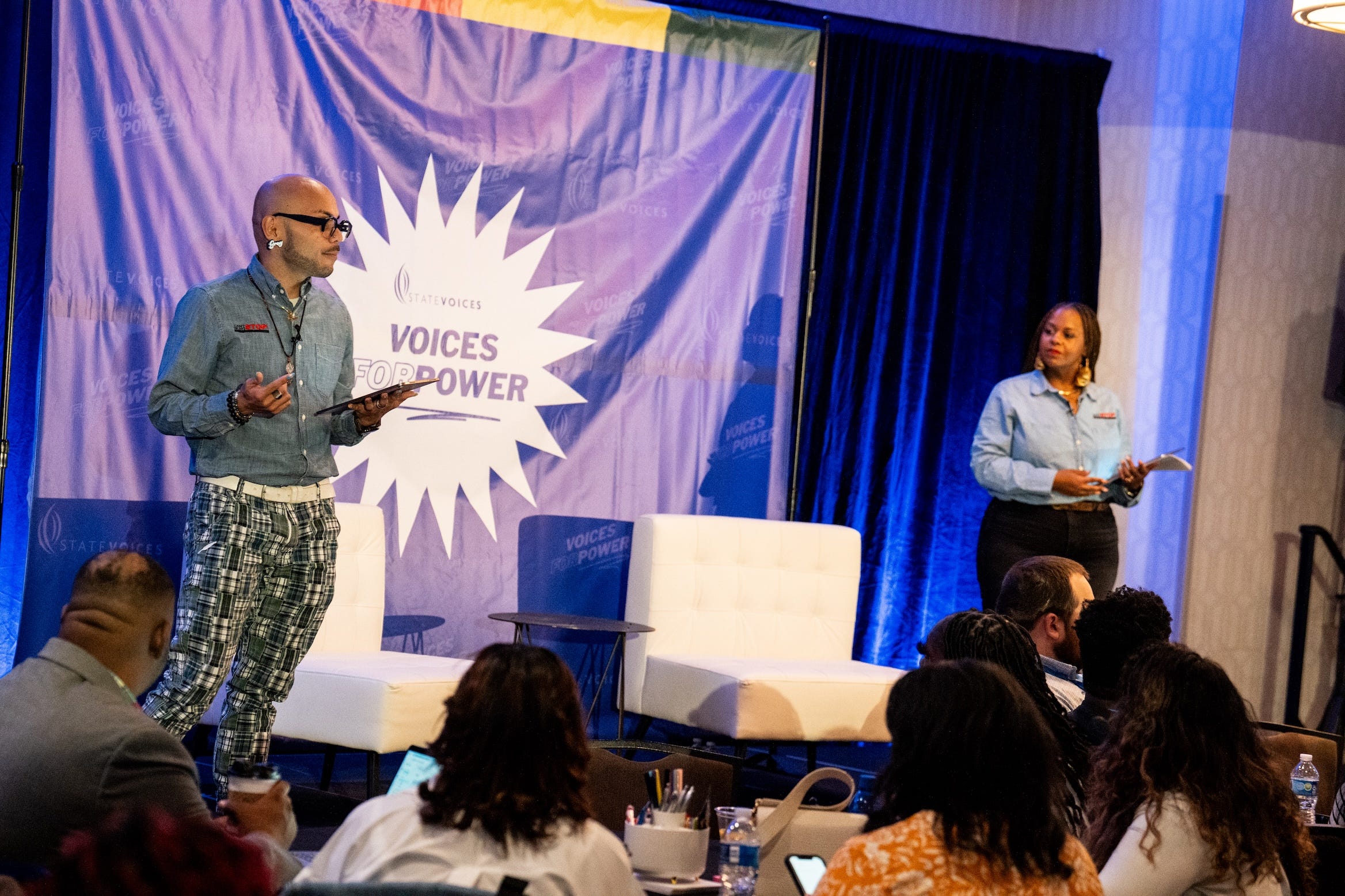
Here’s a question we’ve been sitting with: Is going to the grocery store a convening?
Think about it. You’re in a space with other people. You’re all there for a reason. You might even run into someone you know and have a real conversation. But is that a convening?
We don’t think so. And the reason why matters more than you might expect.
A convening is when people come together for a shared purpose. That’s it. That’s the definition. But each word in that sentence is doing heavy lifting.
People come together — meaning more than one person, in some kind of intentional proximity. This can be physical or virtual, but it can’t be accidental. Running into your neighbor at the store isn’t a convening, it’s a coincidence. Calling a meeting with your neighbor to talk about the block party is.
Shared purpose — meaning there’s a reason this is happening, and ideally, the people in the room know what it is. A family reunion is a convening. A staff meeting is a convening. A church or other faith service is a convening. A funeral is a convening. A birthday party is a convening. Even a protest is a convening.
But here’s where it gets interesting. A birthday party can stop being a convening the moment the purpose shifts. We’ve all been to the kid’s birthday party that’s really about the parents: where the guest list, the venue, the aesthetic, the content is all designed to impress other adults, and the child whose birthday it is becomes a prop in someone else’s production. The shared purpose has been hijacked. The person being centered has been replaced.
That’s not a convening anymore. That’s a performance.

The Two Questions That Define a Convening
We’ve come to believe that every convening lives or dies on two questions:
1. What is the intent? Why are these people being brought together? Is the purpose clear, honest, and shared? r is it ambiguous, hidden, or serving someone other than the people in the room?
2. Who is being centered? Whose needs, perspectives, and experiences are shaping the design of this experience? Is it the people being convened or the person doing the convening?
When both answers are clear and aligned, you have a convening. When they’re not, you might have a gathering, an event, a meeting, or a spectacle—but you don’t have a convening.
Share this article with a convener, planner,
and room-shaper you know!
Expanding the Map
One thing we’ve been exploring together is how narrow our cultural imagination is about where convening happens. When most people hear the word, they think of conference rooms and hotel ballrooms. But some of the most powerful convenings in our lives have happened in kitchens.
At dinner tables.
In barber shops and hair and nail salons.
On stoops and porches.
At church.
And even on cruise ships.
These spaces have something that most conference rooms don’t: an environment that was built for the people in it, not for the agenda on the wall or in the slides. The barber shop doesn’t need an icebreaker. The kitchen table doesn’t need a facilitator’s guide. The trust is already in the architecture.
Gregory recently spent time aboard Royal Caribbean’s Utopia of the Seas, a floating city carrying roughly 10,000 people: 7,900 passengers and 2,100 crew. None of them chose each other. They came from different countries, cultures, and generations. And yet, from the moment you board, the ship is designed to convene you through multiple environments built for different energies, crew members trained to create micro-moments of welcome, and enough variety that every person can find the room that feels like theirs. A cruise ship isn’t what most people picture when they hear “convening,” but it answers both defining questions clearly. We’ll have more to say about convening at scale in a future piece.
Carmen’s first convening wasn’t one she chose… it was one she was born into. The kitchen in her household was the center of everything. It was where meals were made and stories were told. It was where her hair got pressed and where she learned to listen. Nobody called it a convening, but it had everything our definition requires: people coming together, a shared purpose, and someone being centered, usually whoever needed care that day. We underestimate how much of our understanding of what it means to be together was shaped before we ever walked into a conference room. The kitchen table taught us that a convening doesn’t start with an agenda. It starts with presence.
That doesn’t mean professional convenings can’t learn from these spaces. It means they must.
If we’re serious about redefining the tradition of coming together, we have to start by expanding what counts as coming together in the first place. The conference is not the ceiling of convening. It’s barely the floor.
So when someone asks you, “What’s a convening?”, here’s what we’d say:
A convening is any time people come together with shared purpose, clear intent, and a commitment to centering the people the room is actually for.
Everything else is just a meeting. And maybe one that could’ve been an email.
This conversation is better with more people in the room. If this piece sparked something for you, forward it to a colleague, a fellow facilitator, or that friend who’s always the one holding the space. And if someone sent this to you, welcome. Subscribe so you don’t miss what’s next.
Love this. Cannot wait for the next episode