

What We Had to Unlearn Before We Could Convene Differently
The old playbook worked. Until it didn’t.


Listen to the audio version here.
We came up in rooms that taught us a very specific way to convene, and if we are honest, those rooms taught us a lot about how to move work, hit deadlines, sound smart, and keep the meeting going, while also teaching us a lot about what people had to swallow just to survive it.
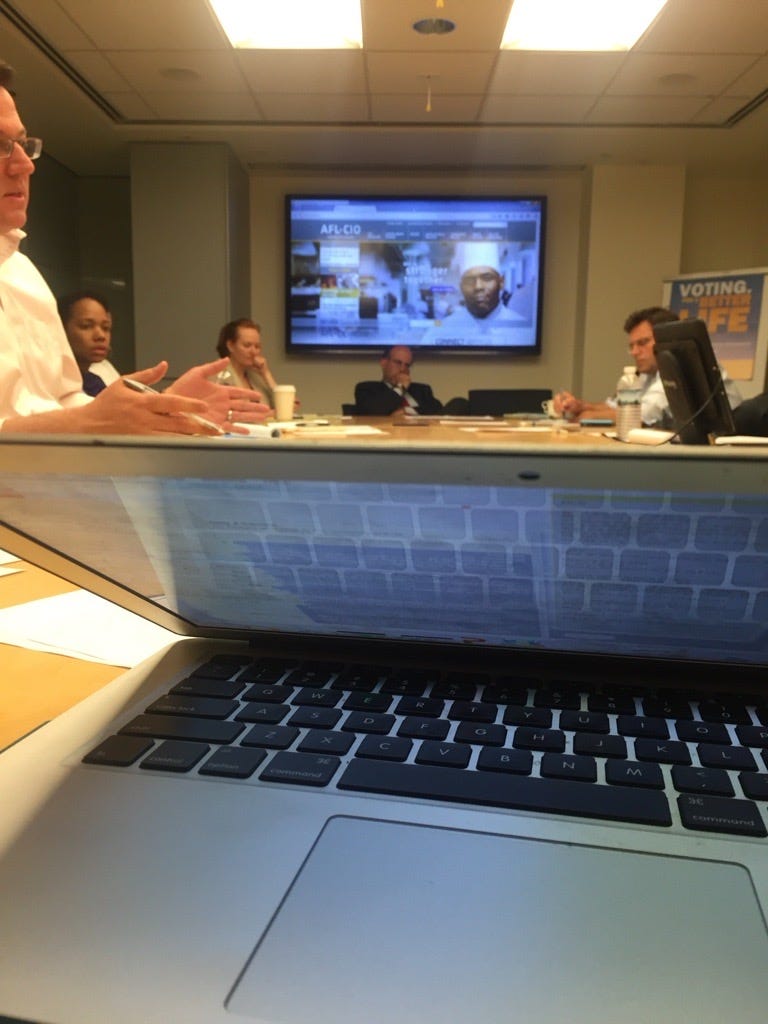
Carmen learned it in political organizing, in the NAACP, the AFL-CIO, in campaign war rooms and national convenings where the agenda was tight, the stakes were high, and the measure of a good meeting was whether you left with a clear-ish action plan that may or may not ever get implemented, but at least everybody could say they were there when the plan got made. The tradition was urgency, efficiency, and a kind of grind culture that made people say things like “sleep is for the weak” as if being tired were a leadership competency. In some rooms, the message was simple, we do not have time to feel things because we have work to do. In others, it was dressed up a little differently, but it landed the same way, because you could spend three whole meetings talking, analyzing, defining, debating, and wrestling over language, and still walk out without the one thing people actually needed, which was clarity.
Gregory learned it in labor and nonprofit leadership in D.C., in boardrooms, cohort programs, and facilitation spaces where the measure of success was whether the facilitator maintained control, hit every time stamp, and kept everyone from wandering too far off script. The tradition was structure, polish, and a deep and slightly alarming faith in the strategic planning template, as if the right framework and a backward plan were all that stood between us and transformation. Also, some of those rooms barely gave you snacks, and asking people to be vulnerable when they are hungry is honestly its own kind of organizational dysfunction.
And to be fair, those traditions did produce results. They moved agendas forward, created plans, and helped people make decisions. They gave people a sense of momentum, which can feel very close to progress when everybody is busy and the flip charts are full.
But they also left a trail.
This conversation is better with more people in the room.
A trail of people who showed up, participated, nodded at the right times, said something smart in the breakout, and still went home feeling unseen. A trail of people who watched beautiful plans get made and then quietly disappear because a room can produce a document without ever producing commitment.
That is one of the biggest things we had to unlearn. We had to unlearn the idea that productive meetings and people-centered meetings cannot live in the same house, as if clarity and care are sworn enemies, or as if strategy gets weaker the moment people bring their full humanity into the room.
What we know now is the opposite. Heart-centered leadership is not the enemy of results — it is often the reason results can actually hold.

The Unlearning
Unlearning is not forgetting, and it is not throwing out every tradition we inherited just because we have a newer language now and a lower tolerance for nonsense. It is more honest than that, and more demanding too, because it asks us to look directly at the rooms that shaped us, understand why those habits took root, and decide which ones still serve the people we are convening, and which ones mostly serve control, ego, or institutional comfort dressed up as excellence.
Here is some of what we had to unlearn.
That the convener’s comfort matters more than the room’s.
We were trained to control rooms, manage energy, redirect tangents, and keep things “on track.” But whose track are we talking about, and who decided it mattered more than what was actually happening in the room. We had to learn that sometimes the most important thing happening is the thing that was not on the agenda at all.
That urgency is the same as importance.
If you have worked in politics, philanthropy, organizing, or nonprofits for more than five minutes, then you already know that everything is urgent until it is not, every email is on fire, every deadline is somehow the deadline, and everybody wants to act like if this does not get solved by 3:00 p.m. the whole earth is going to slide off its axis. But urgency is a feeling, and sometimes it is a tactic, and it is definitely not always the truth. When urgency runs the room, it pushes out the slower work that actually builds something lasting, trust, reflection, repair, and enough honesty for people to say what is really going on instead of what sounds efficient.
That professionalism and humanity are at odds.
We were taught that a well-run meeting is a tight meeting, but sometimes tight is just another word for rigid. Tight can mean there is no room for grief, joy, culture, silence, difference, or the actual body of the person sitting in the chair. We had to unlearn the idea that bringing your whole self into a room is a disruption, when often it is the very thing that makes the room real.
That discomfort is failure.
Some of the most important convenings we have ever been part of were uncomfortable, not because they were poorly designed, but because people were finally honest. We had to unlearn the reflex to smooth everything over and learn instead how to stay with the productive mess long enough for truth to do its work.
What We Learned Instead
What grew in the space left by all that unlearning was not chaos. It was not softness without structure. It was not everybody sitting in a circle with no plan and a lot of feelings.
What grew was a deeper kind of discipline.
We learned that some of the best meetings we have ever been in were the ones where someone finally said the thing everybody else was thinking, and the room changed because the truth had entered it. The best rooms were often the ones where someone cried, or laughed too loud, or admitted they did not know, or named the tension everyone had been politely stepping around.
We learned that care is not fluff, and warmth is not weakness, and making room for people’s full humanity does not dilute strategy, it deepens it.
We learned that the old playbook worked, until it didn’t.
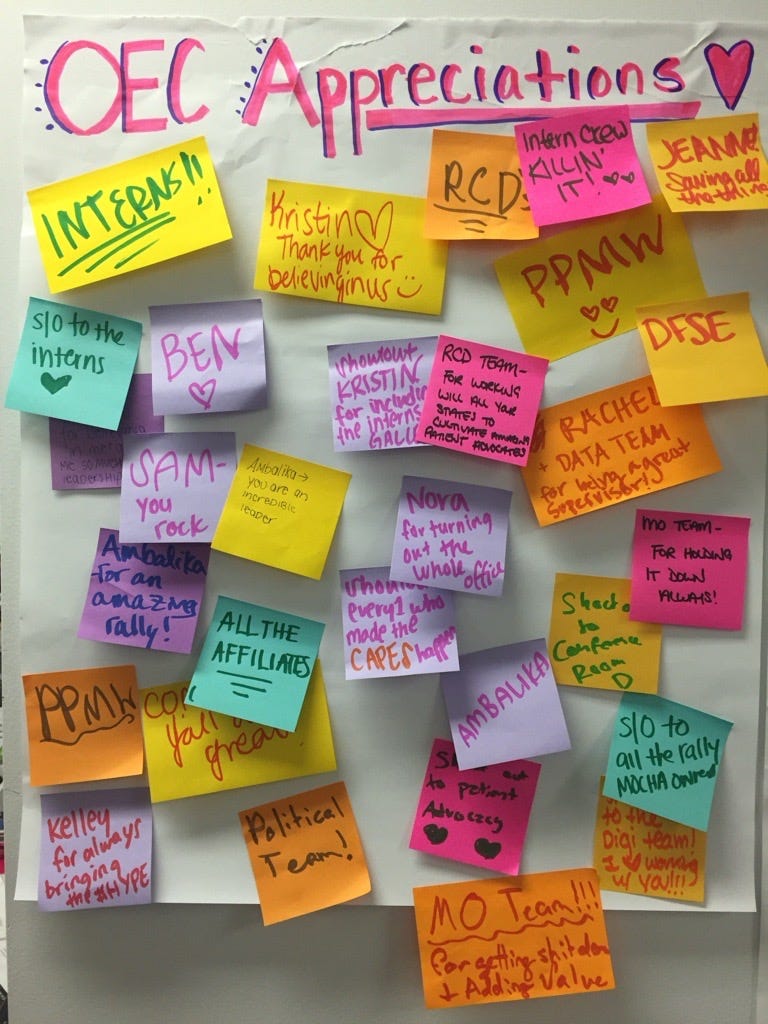
For some people, the old way is still convenient because it protects the ego, rewards control, and lets people confuse polish with impact. But people have changed, and the world has changed, and if we are serious about centering the people most impacted, then we have to admit that many of the ways we were taught to convene never really worked for them in the first place.
We are still unlearning, and we probably always will be, because many of these habits got rewarded for a long time. They made us look prepared, sharp, and in control. But being rewarded for something is not the same as it serving the people we are here for.
And honestly, we would rather be in the mess of redefining than in the comfort of repeating what no longer serves.
That, too, is part of what it means to convene differently.
Even if you are feeling iffy about this platform, you know what we are saying is right! Share this article with someone who needs it!
We love hearing from you! Feel free to leave us a comment!
 | A guest post by
|
 | A guest post by
|
 | A guest post by
|